Membres
Latest updates and news from Samitivej Hospital
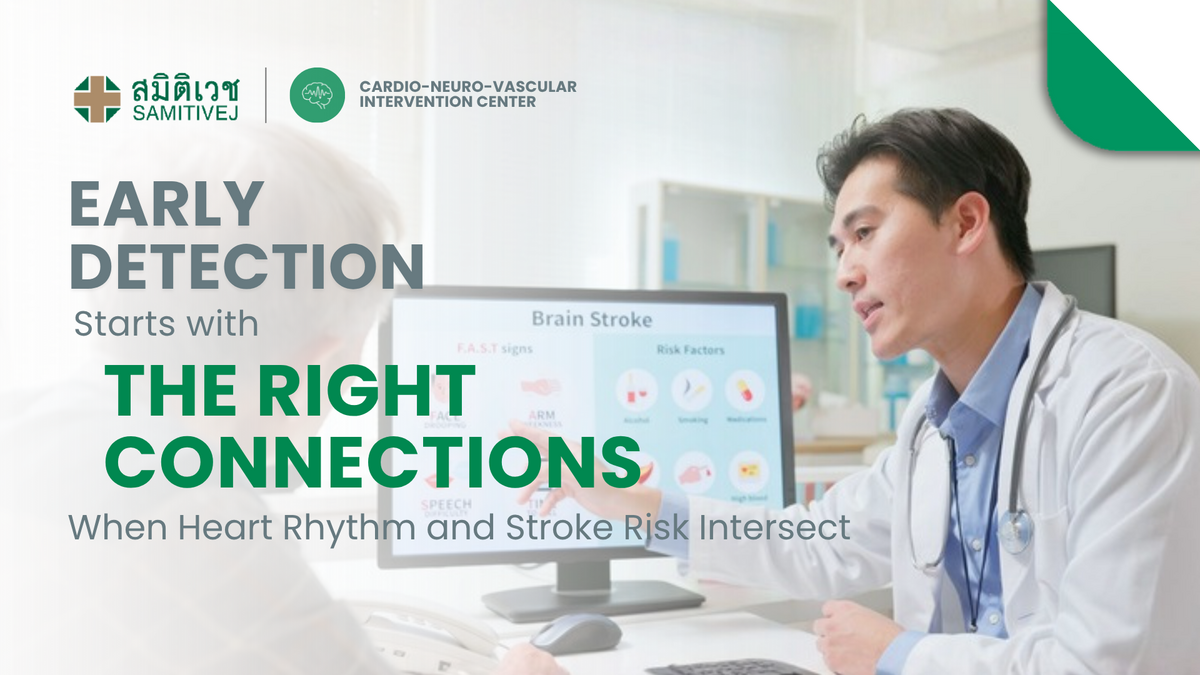
Hidden Connections: When Heart Rhythm Becomes Stroke Risk
One of the most important, yet often overlooked, connections in the body is between the heart and the brain. In particular, certain heart rhythm disorders can significantly increase the risk of stroke, even in otherwise healthy individuals.
When the heart’s rhythm affects the brain
Atrial fibrillation (AF) is one of the most common heart rhythm disorders. Instead of beating in a steady, coordinated way, the heart upper chambers beat irregularly. This can cause blood to pool and form clots.
If a clot travels from the heart to the brain, it can block blood flow—resulting in a stroke.
What makes this especially concerning is that many people with atrial fibrillation:
- Do not experience noticeable symptoms
- May only have intermittent episodes
- Remain undiagnosed until a complication occurs
In fact, atrial fibrillation increases the risk of stroke by up to five times.
Stroke risk is often preventable but only if detected early
Beyond heart rhythm disorders, other vascular conditions can also increase stroke risk:
- Narrowing of the carotid arteries (which supply blood to the brain)
- High blood pressure damaging blood vessels over time
- Atherosclerosis affecting both heart and brain circulation
Because these conditions are interconnected, identifying risk requires looking at the entire cardiovascular and neurological system—not just one organ in isolation.
Why early, integrated evaluation matters
When risk factors are assessed together, doctors can:
- Detect silent conditions before they lead to complications
- Evaluate both heart rhythm and blood vessel health simultaneously
- Initiate preventive treatments at the right time
- Reduce the likelihood of stroke and long-term disability
For patients, this means moving from reactive treatment to proactive prevention.
Recognizing the signs of atrial fibrillation
Atrial fibrillation does not always cause obvious symptoms, but when it does, it may present an irregular or rapid heartbeat that feels like fluttering, racing, or “skipping” in the chest. Some individuals experience palpitations, shortness of breath, fatigue, dizziness, or reduced exercise tolerance. Others may notice a general sense of weakness or feel unusually tired during routine activities. In some cases, symptoms come and go, making them easy to dismiss. Importantly, it is also possible to have atrial fibrillation without any symptoms at all—yet still carry a significant risk of stroke.
Learn more: https://www.samitivejhospitals.com/center/detail/cardio-neuro-vascular-intervention-center
Doctor list: Hospital in Bangkok, Thailand | Samitivej
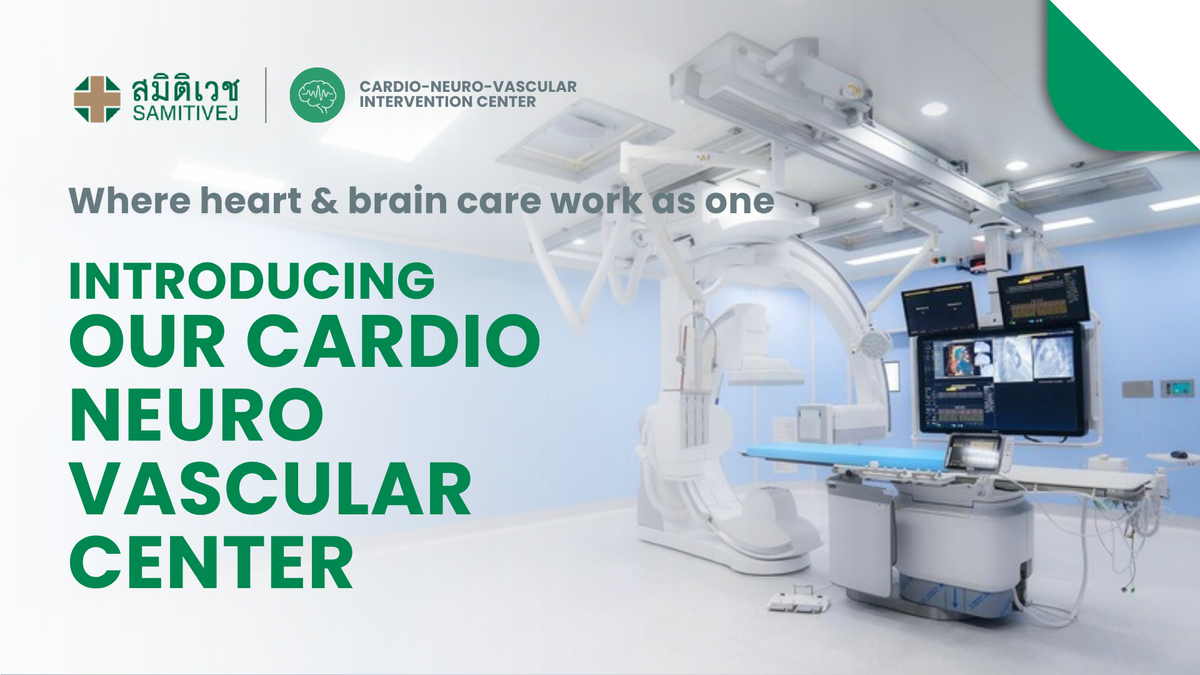
A New Era in Integrated Heart & Brain Care: Cardio-Neuro-Vascular Approach
Your heart and brain are more connected than you may think.
Conditions such as stroke, hypertension, aneurysms, atrial fibrillation, and vascular diseases do not occur in isolation. They are often part of a complex, interconnected system where the heart, brain, and blood vessels continuously influence one another. Treating them separately can sometimes mean missing the bigger picture.
This is why a new, more integrated medical approach is emerging—one that brings cardiology, neurology, and vascular intervention together.
Why an integrated Cardio-Neuro-Vascular approach matter
Many serious health events are the result of overlapping conditions:
- Atrial fibrillation can lead to stroke
- Carotid artery disease can impair blood flow to the brain
- Hypertension and vascular inflammation can affect both heart and cognitive function
- Atherosclerosis can simultaneously impact coronary and cerebral arteries
Traditionally, these conditions are managed across different specialties. However, without close coordination, important links between them may be overlooked.
An integrated approach ensures:
- Earlier detection of risks through combined expertise
- More precise diagnosis using shared imaging and data
- Coordinated treatment plans that address root causes, not just symptoms
- Reduced complications by aligning interventions across specialties
- Improved long-term outcomes, especially for complex or high-risk patients
What this means for patients
Patients benefit from a more seamless and comprehensive experience:
- Multidisciplinary evaluation in one place
- Faster decision-making for urgent or complex cases
- Personalized treatment strategies based on the full vascular picture
- Access to advanced, minimally invasive interventions
- Better continuity of care from diagnosis through recovery
This model is particularly valuable for individuals with:
- Stroke or high stroke risk
- Heart rhythm disorders (e.g., atrial fibrillation)
- Vascular diseases affecting the brain or heart
- Diabetes, hypertension, or other chronic conditions impacting circulation
- Family history of cardiovascular or neurological disease
A more holistic future of care
Medicine is moving toward integrated care because the body itself is integrated. By aligning specialties around how diseases actually develop and interact, patients receive care that is not only more efficient—but also more effective.
Learn more: https://www.samitivejhospitals.com/center/detail/cardio-neuro-vascular-intervention-center
Doctor list: Hospital in Bangkok, Thailand | Samitivej
Samitivej Hospital
Your partner in advanced, patient-centered care
Know Your Heart: Why Early Heart Screening Matters
Many people assume heart disease begins when symptoms appear. Risks often develop quietly over the years, making regular heart screening an important step in prevention.
What shapes your heart's health?
Your heart health is influenced by a combination of factors—some within your control, others not.
- Genetics: An estimated 20–30% of heart disease risk may be influenced by inherited factors, especially in those with a family history of early heart disease.
- Age: Structural and vascular changes can begin as early as your 40s, when arteries may start to lose flexibility, and early plaque may form.
- Lifestyle: Smoking, alcohol, poor sleep, stress, and diet significantly affect long-term heart health.
- Medical conditions: High blood pressure, cholesterol, and blood sugar are among the most important contributors, often silently damaging blood vessels over time
These factors rarely act alone they combine gradually increasing risk over the years.
Who Should Consider Heart Screening?
A cardiovascular assessment may be particularly beneficial if you:
- Are aged 40 or older
- Have a family history of heart disease or stroke
- Have diabetes, high blood pressure, or high cholesterol
- Smoke or have a history of smoking
- Are overweight or physically inactive
- Experience ongoing stress or an irregular lifestyle
- Have not had a comprehensive heart check-up within the last two years
Matching symptoms with the right heart screening
Test | Best For (Symptoms) | What It Checks |
ECG / EKG | Palpitations, irregular heartbeat | Records the heart’s electrical activity to detect arrhythmias and rhythm abnormalities |
Echocardiogram (Echo) | Breathlessness, fatigue | Uses ultrasound to visualize heart structure, valves, and pumping function |
Exercise Stress Test | Reduced stamina, chest discomfort | Assesses how the heart performs under physical activity and detects reduced blood flow |
Blood Tests | Silent risk detection (no symptoms) | Measures cholesterol, blood sugar, and metabolic markers linked to heart disease |
Sleep Test | Poor sleep, snoring, daytime fatigue | Identifies sleep apnea, which can contribute to high blood pressure and cardiovascular risk |
At Samitivej Hospital Heart Center, we provide a holistic approach to heart care from early detection and diagnosis to advanced treatment, surgery, and rehabilitation. Supported by internationally trained specialists and advanced technology such as the 640-slice CT scanner, patients benefit from faster, safer, and more precise evaluation.
With integrated facilities including operating rooms, cath lab, and CCU in one location, care is designed to be seamless and efficient in delivering trusted outcomes for international patients.